Waterproof vs Fabric vs Plastic Bandages: Which Sells in Your Market?
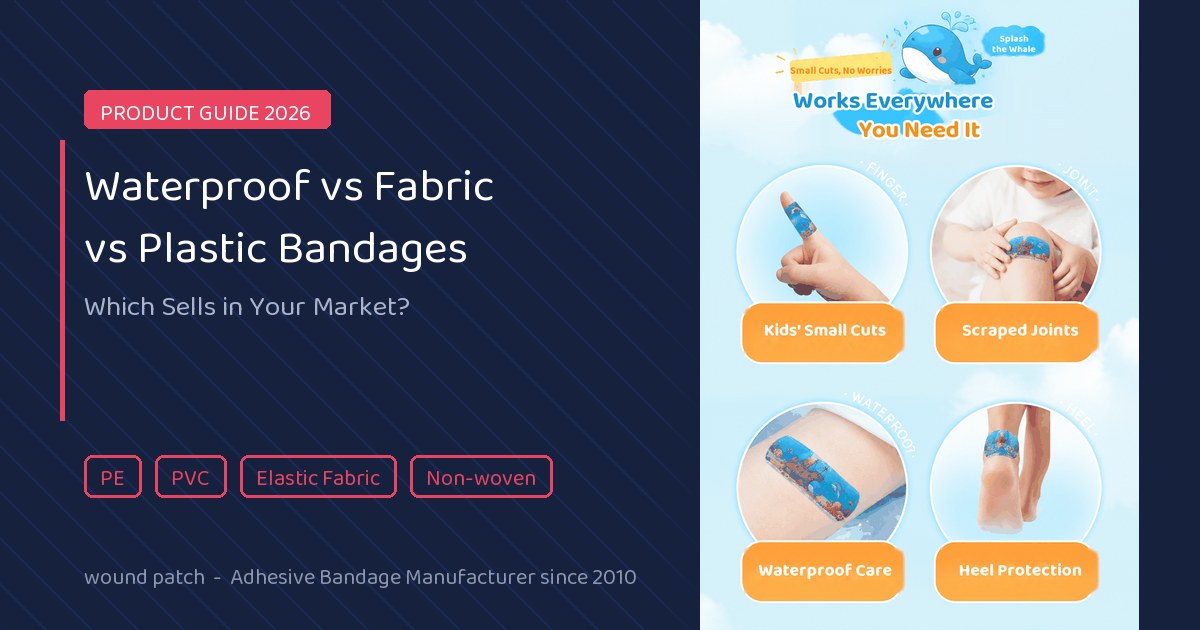
Walk into any pharmacy in Hamburg, any supermarket in Dubai, or any dollar store in Texas, and you will find the same product on the shelf: adhesive bandages. But look closer, and the material behind the printed cartoon or plain skin tone is never the same. Some are plastic, some are fabric, some promise to survive an entire swimming lesson.
For importers, wholesalers and private label buyers, this is not a small detail. The backing material decides the price point, the target customer, the seasonality, and even the return rate of the product you put your own brand on. Choosing the wrong material for your market is one of the most common — and most expensive — mistakes in this category.
This guide compares the three mainstream backing materials: waterproof (PE film), fabric (elastic cloth), and plastic (PVC), and explains which one fits which market, channel and price segment.
Quick Comparison Table
| Feature | Waterproof (PE) | Fabric (Elastic Cloth) | Plastic (PVC) |
|---|---|---|---|
| Water resistance | Excellent | Low to medium | Medium |
| Flexibility | Medium | Excellent | Low |
| Breathability | Low | Good | Medium |
| Typical price level | Medium | Highest | Lowest |
| Best for | Kids, sports, bath | Premium retail, pharmacies | Promo packs, first-aid kits |
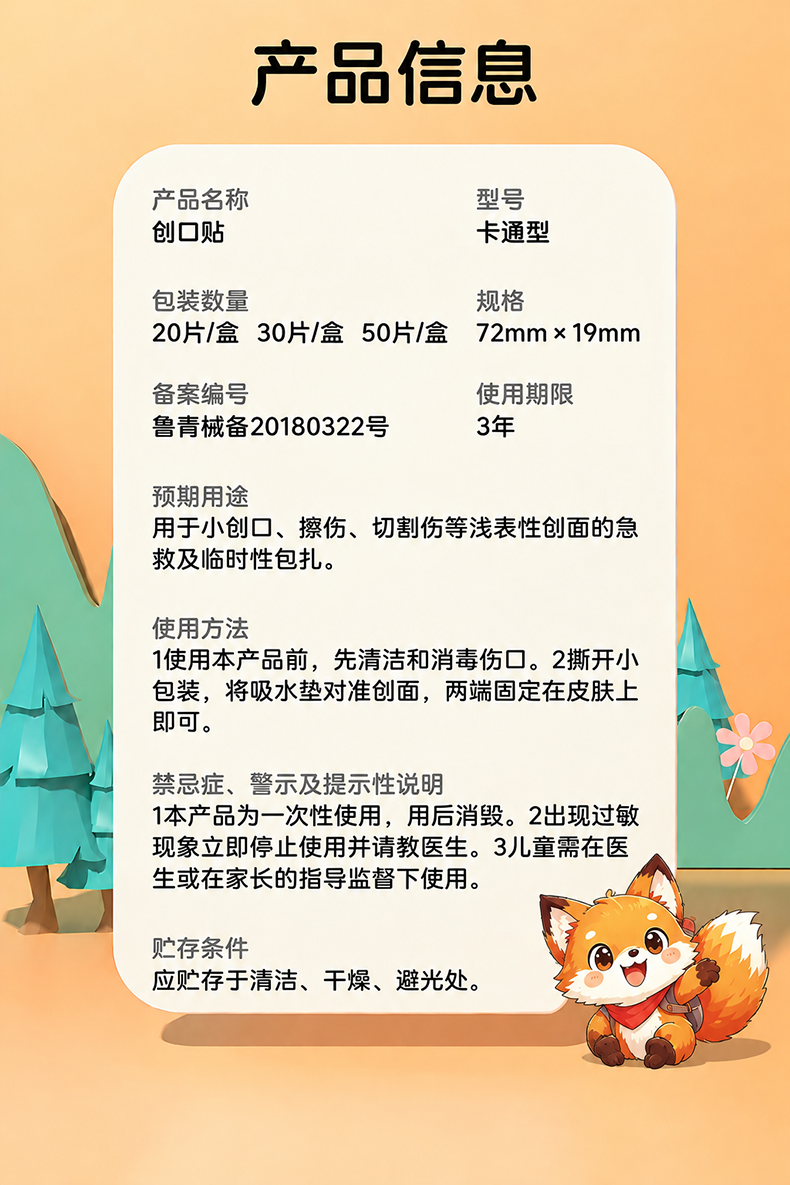
1. Waterproof Bandages (PE Film): The Kids and Sports Champion
Waterproof bandages use a polyethylene (PE) film backing that blocks water from reaching the wound pad. A good waterproof bandage survives hand washing, showering and even swimming, which is exactly why parents love them.
Where they sell best
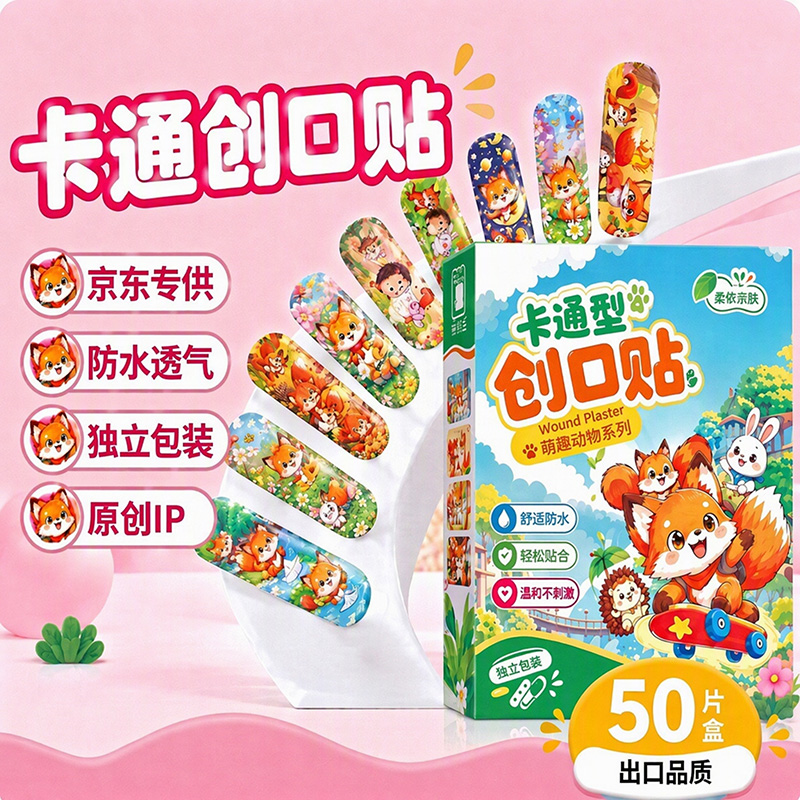
- Kids segment: cartoon-printed waterproof bandages are the best-selling SKU in most children's lines. Kids wash hands constantly; a bandage that falls off in the sink generates complaints.
- Summer and beach retail: pool shops, supermarkets in hot climates, and travel-size first-aid kits.
- Sports channels: gyms, pharmacies near sports facilities.
Trade-offs to explain to your customers
PE film is less breathable than fabric. For long wear on low-movement wounds, some users find the skin under the film gets soggy. That is why many professional buyers stock waterproof and fabric side by side rather than replacing one with the other — they solve different problems.
Our own OEM waterproof cartoon bandage line is built on this material, including shower-proof and swimming variants for kids' retail programs.
2. Fabric Bandages (Elastic Cloth): The Premium Feel
Fabric bandages are made from elastic woven or non-woven cloth coated with acrylic adhesive. They flex with the skin, breathe well, and stay comfortable through a full workday. This is the material pharmacists recommend for wounds on joints — fingers, knuckles, elbows, knees.
Where they sell best
- Pharmacies and drugstores: the "quality" shelf. Fabric commands the highest retail price in the category.
- Industrial and workplace safety programs: factories and logistics companies buy fabric fingertip bandages in bulk because workers keep them on through shifts.
- Premium private label: if your brand positions on comfort and quality, fabric is the material that backs up the promise.
Trade-offs
Fabric absorbs water and loses adhesion when soaked. It is also the most expensive material per square meter, which matters for price-sensitive markets. For bulk programs, many buyers mix fabric SKUs for premium lines with plastic SKUs for value packs.
3. Plastic Bandages (PVC): The Volume Workhorse
Standard plastic bandages use a thin PVC film. They are the lowest-cost option, dimensionally stable, easy to print on, and perfectly adequate for short-term protection of small cuts.
Where they sell best
- Promo and giveaway packs: printed logo bandages for hotels, airlines, restaurants and marketing campaigns are almost always PVC, because the unit cost supports free distribution.
- First-aid kits: workplace and home kits packed in large quantities.
- Value retail: discount stores and multipack economy SKUs.
Trade-offs
Rigid PVC does not stretch, so it peels off joints quickly. Users notice. That is exactly why plastic works for flat areas and short wear, but fails the "kids running around" test.
So Which Material Should You Order?
The honest answer from a manufacturer's side: most successful private label programs start with a mix, not a single SKU. A typical first order that sells well across channels looks like this:
- One waterproof cartoon line for kids and family retail
- One fabric line for pharmacy and premium placement
- One plastic value pack for promos and first-aid kits
This mix lets you test which material your market actually rewards, without betting the whole brand on one guess. When you plan the mix, also decide the specifications early — our manufacturer and certifications overview lists the standard sizes, pad types and packing formats we produce.
Questions to Ask Your Supplier Before Deciding
- Which adhesive system is used, and is it hypoallergenic and latex-free?
- What is the actual water test protocol for the "waterproof" claim — shower, bath or swimming?
- Can the film be printed with my own cartoon or IP artwork, and what is the printing proofing cost?
- What MOQ applies per material and per design?
- Which certificates cover the specific material (CE, FDA, ISO 13485) — the certificate must match the product, not just the factory.
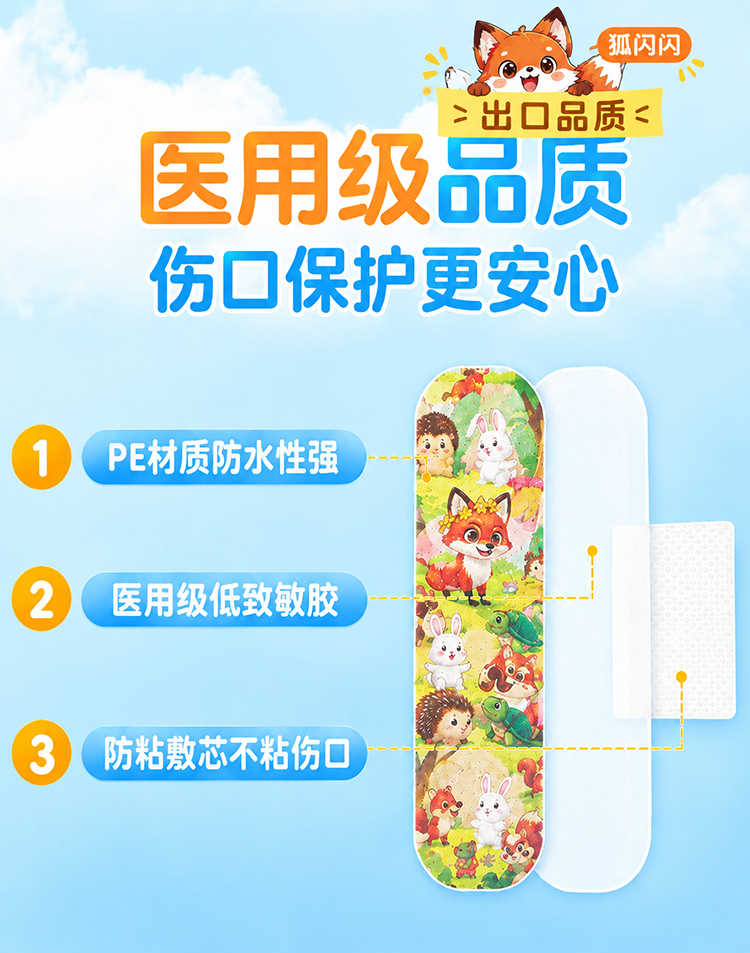
If you are comparing suppliers by order volume, our wholesale and bulk supply page explains packing formats and tier pricing for each material type.
Final Word
Material choice is market choice. Waterproof for kids and summer, fabric for premium and joints, plastic for volume and promos — and a smart mix when you are still learning your market. Get the material decision right, and every downstream decision, from packaging design to retail pricing, becomes easier.
Planning a private label bandage line? Send us your requirements — we will recommend the material mix that matches your market, with free samples to test before you commit.
Comments (0)
No comments yet. Be the first to comment!